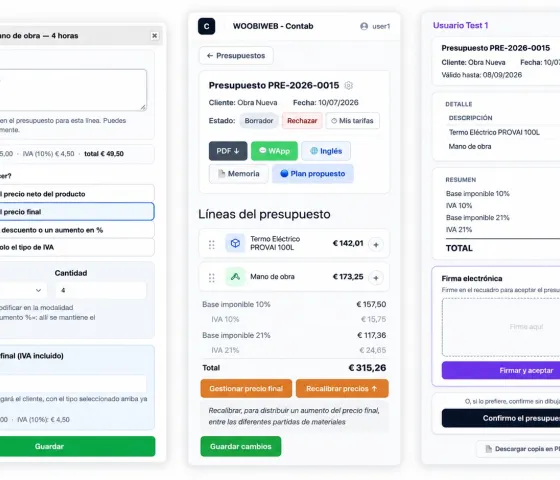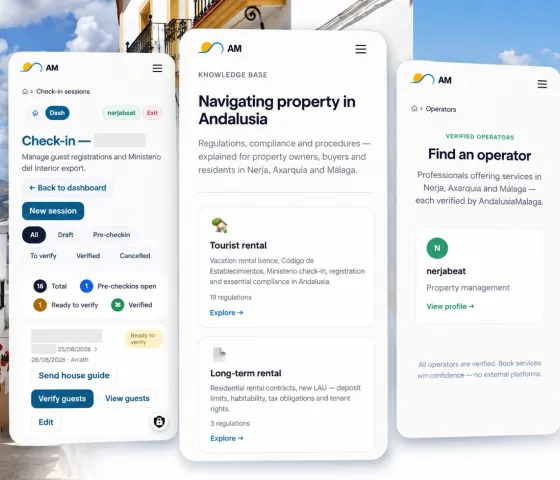
PropTech
AndalusiaMalaga
Change the project when the analysis shows that the problem to be solved is a different one.
I help small businesses and professionals improve the way they work through practical digital solutions.
I start with real processes and real needs, design the solution and, when needed, build it too.
Tell me about your problemYou don't always need new software. And choosing a technology is rarely the right place to start.
Often, the first step is simply to look at how the work gets done today: where time is being lost, where information gets scattered and what could work better.
Excel, email, WhatsApp and separate applications are still holding together processes that have become increasingly complex.
The answer isn't necessarily to replace them. It's to understand when they're no longer enough.
You have a website, an e-commerce platform, management software or another digital system, but it hasn't really become part of the day-to-day work — or it isn't delivering the value you expected.
Before replacing everything, it's worth understanding why.
Quotes, orders, documents, checks, communications, updates and repetitive tasks take time and create opportunities for error.
Some can be organised better. Some can be automated. And some are better left exactly as they are.
Automation and artificial intelligence are opening up interesting possibilities. But adopting a technology simply because it's new isn't innovation.
The question I'm interested in is different: can it make a practical difference to the way you work?
My work doesn't usually begin by choosing a platform or writing code. It begins by asking questions.
We look at how the business actually works: who does what, what information people need, where problems arise and what we're trying to achieve.
We turn what we've learned into a project. We decide what is worth changing, what should stay as it is and which tools could genuinely help.
When the solution requires custom software, I can take care of both its design and development.
Websites and platforms, management systems, e-commerce, integrations, automation and AI applications are options — not starting points.
A digital project doesn't end when it goes live.
Day-to-day use reveals needs that couldn't always have been anticipated on paper. That's why I prefer to build systems that can grow with the business.
Many of the projects I value most didn't start with a predefined technical specification. They grew through conversations, by observing how people actually worked and by adapting the solution as new needs emerged.
I live and work in Nerja, in the province of Málaga, Spain.
This gives me the opportunity to work directly with local businesses, see how they operate and understand their problems and opportunities first-hand.
At the same time, I work remotely with businesses, professionals and organisations in Spain, Italy and elsewhere.
Distance changes how we meet. It doesn't change the method: understand the context first, then choose the technology.
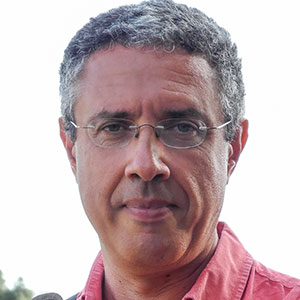
I'm a software developer and technology consultant.
I started developing software when many of the technologies we use today didn't yet exist. Languages, platforms and tools have changed enormously since then. What hasn't changed much is the part of the work I still enjoy most: understanding a problem and finding a sensible way to solve it.
I've worked with small businesses, professionals, companies and organisations, building management systems, e-commerce solutions, editorial platforms and digital services.
I still develop software and keep learning new technologies. Today that includes automation and artificial intelligence. But I try to keep one important distinction in mind: knowing a technology doesn't mean you have to use it.
More about me →I write about technology, mostly starting from the problems I encounter in my work.
Processes, decisions, software, automation, artificial intelligence and digital independence. Not so much to predict what the future will look like, but to understand what we can do better today.
It might be a process that takes too much time, software that doesn't do what it should, an idea you're not yet sure how to turn into a project, or simply the feeling that there must be a better way of working.
You don't need to know which technology you need. We can work that out later.
Tell me about your problem